
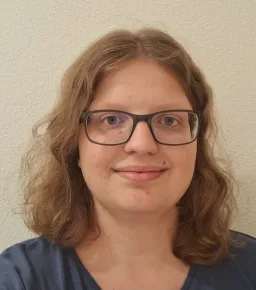
About Elyne Diener
Elyne Diener studies human medicine at the University of Basel and works in a Basel emergency department. There she regularly meets people after road accidents – exactly the situations the first aid course for the driver's licence prepares you for. At First Aid Course Zurich she teaches most of the courses at Lagerstrasse 2 near Zurich HB.
Elyne speaks Swiss German, German and English fluently and therefore also teaches our English-speaking groups. In this interview she explains what she has learned in the emergency department, how a heart attack differs from cardiac arrest and why bystanders are the real lifesavers in the decisive moment.
From the Basel Emergency Department to the Classroom
Elyne, you study medicine in Basel and work in an emergency department. Why do you also teach first aid courses?
In the emergency department I often see people after road accidents. And I see how much the first minutes at the scene matter – the time before anyone from the ambulance service has even arrived. When someone at the scene reacted correctly, we notice it in the hospital. That's why teaching young (and older) people the basic principles of first aid is an honour for me – and the logical complement to my work.
The Marvel of the Cardiovascular System
The heart takes up a lot of space in the course. What fascinates you so much about this organ?
The heart is the ultimate engine of life. What fascinates me most is its tireless precision and endurance: it starts beating long before we are born and pumps blood through tens of thousands of kilometres of vessels day and night – completely autonomously, without us ever having to think about it. It combines mechanics, electrics and biology in one fascinating, fist-sized muscle. Once you understand the complex processes of the conduction system or haemodynamics in detail during your studies, your respect for this organ grows exponentially.
At the same time, this central role also makes it the most vulnerable point. Every minute in which the heart doesn't work properly immediately affects the rest of the body. It is exactly this tension – enormous power on the one hand and the need for absolute protection on the other – that makes cardiology and emergency first aid so crucial.
Heart Attack, Heart Failure, Cardiac Arrest: A Crucial Difference
In everyday language, terms like heart attack and cardiac arrest are often mixed up. Why is it important to know the differences, and how can laypeople best remember them?
That really is one of the most common mix-ups! In my courses I always explain it using an engine comparison. There are three fundamentally different problems that can be linked, but have completely different physiological causes:
🚰 1. Heart Attack (The Plumbing Problem)
In a heart attack, a blood vessel (coronary
artery) that supplies the heart muscle itself
becomes blocked. The engine is still running, but it lacks
fuel in one particular spot. The patient is usually still conscious and
complains of strong pressure or pain in the
chest, often radiating into the arm or jaw.
Action: Call 144 immediately! Position
the patient calmly (upper body raised), absolute
physical rest, reassure them.
⚙️ 2. Heart Failure (The Mechanical Problem)
The heart muscle is weakened and no longer
pumps efficiently. Blood backs up, e.g. into the
lungs. The pump simply lacks strength. Acutely, this often shows as extreme shortness
of breath, rattling breathing and fear of death,
often building up over hours or days.
Action: Call 144! Let the person sit
upright to ease breathing – do not lay them down.
⚡ 3. Cardiac Arrest (The Electrical Problem)
The heart's electrical signals go haywire
(ventricular fibrillation) or stop completely. The engine stops abruptly. The patient collapses, immediately loses
consciousness and no longer breathes normally. At
this moment circulation stops, and without help
the brain dies within a few minutes.
Action: Call 144, start chest compressions (CPR) immediately and use an AED (defibrillator) as quickly as
possible!
A heart attack can trigger cardiac arrest – but it doesn't have to. The most important thing for laypeople: if someone is unconscious and has no normal breathing, it is cardiac arrest. Then every single second counts.
Latest Findings: What Does the Swiss Resuscitation Council (SRC) Say?
Medicine is constantly evolving. What are the current SRC guidelines for laypeople in extreme situations such as cardiac arrest?
The 2021 SRC guidelines (based on the European guidelines) have fortunately simplified the rules for laypeople enormously and put the focus on what really matters: Quick recognition and uninterrupted compressions.
The SRC BLS-AED Scheme in Focus
- No pulse check for laypeople: If the person is unresponsive and not breathing normally (note: gasping is NOT normal breathing!), start CPR immediately. Don't lose any time.
- Push hard, push fast: Chest compressions are absolutely central! Rate: 100 to 120 per minute. Depth: 5 to 6 cm (in adults). Then let the chest recoil completely so the heart can fill with blood again.
- Rescue breaths have become secondary: If you are not trained or hesitate to give rescue breaths to a stranger, "hands-only CPR" without pauses is perfectly sufficient in the first minutes. The remaining blood is still saturated with oxygen at first – it just has to circulate! Trained rescuers use a ratio of 30:2 (30 compressions, 2 breaths).
- The AED as a game changer: The automated external defibrillator is the only way to break deadly ventricular fibrillation (the electrical chaos). A reset for the heart. As soon as one is available: switch it on and simply follow the voice instructions.
Taking Away the Fear of Mistakes
When someone collapses unconscious, many people are afraid of breaking ribs during chest compressions, for example. What do you say about that from a medical point of view as a future doctor?
I always say: Without help, this person is clinically dead. A person without normal breathing is in the process of dying. There is absolutely nothing worse than doing nothing. We have to understand that the condition cannot get any worse.
"Yes, good chest compressions 5–6 cm deep sometimes break ribs. But what is a broken rib compared with a life saved? Bones heal – brain damage from lack of oxygen is irreversible."
The brain starts to die after just 3–5 minutes without oxygen. In Switzerland, however, the ambulance takes 10–15 minutes on average. In this gap, you are the only chance of survival. Chest compressions manually take over the heart's function and keep the remaining oxygen supply to the brain going.
Why Practical Corporate Courses (BLS-AED) Are Indispensable
First Aid Course Zurich also offers certified BLS-AED courses for companies. Why is it so important that office teams practise exactly this scenario together?
We spend a large part of our lives at work. If something happens there – say a colleague suffers cardiac arrest during a meeting – there is complete chaos at first. The ability to act collapses entirely when nobody knows who should do what.
An SRC-certified BLS-AED course brings structure to this chaos. It's not just about where to press in theory – we practise the real dynamics on manikins. One person compresses, the second calls for help, the third immediately runs to get the company's defibrillator. We train this coordinated teamwork until so-called "muscle memory" kicks in and the threshold to act drops.
If you share the fascination for first aid and want to be confident enough to save your own team on site in an emergency:
Discover our first aid courses for companies